Policy guidelines for SOE reform

- China promotes SOE reform for 30 yrs:
In the 1990s, many smaller SOEs were privatized. The larger ones were subsidized or merged to create industry giants. - Advantage of SOEs:
SOEs can get natural resources and capital at a much lower cost than private companies, that’s why they can easily make huge profits. - Urgency of SOE reform:
Bigger is not always better - nor is it a guarantee of success outside of China.
Episode 6 - Reform in private lending market
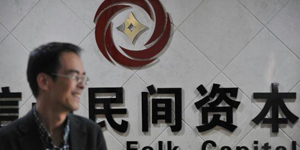
- Difficulties to raise money: Rich people aren’t lending money, and for the companies that need money, raising funds has gotten harder and harder.
- Current solution: Small loan companies and village banks can bring the underground money above ground and suppress the loan sharks.
- Ideal solution: Only way to solve these problems is to open the market. If those big banks are forced to work in an open market, they will be forced to loan money to small businesses.
- Special report: China announces pilot financial reform zone in Wenzhou
Episode 4 - Reform in banking sector

- Market share of small banks and foreign banks up from 20% to 40% in China since 2011.
- Odds: 5 major state-owned commercial banks still dominate the market
- Wayout: Smaller banks should be specialize in certain areas - doing businesses with small and medium-sized companies is one option
- Gov´t support: China’s central government has said several times this year that it will break up the big banks’ monopoly.
Episode 2 - Reform in civil aviation industry

- In 2004 Spring Airlines became one of the first to break the monopoly of the state-owned carriers.
- Challenges: Most lucrative routes are not accessible to them.
Only 31 planes in use. - Wayout: Spring Airlines positioned itself as China’s only budget airline offering cheap tickets.
Raising funds for new planes
Continuing to pursue more lucrative lines
Episode 5 - Reform in financial firms

- Shanghai is now boosting the capacities of its city-owned financial institutions.
- Goal: To surpass government-owned competitors.
- Difficulty: Shanghai´s city-owned financial institutions face capital shortages.
- Reforms: Helping the companies IPO and taking on strategic investors
- Result: Companies become bigger and richer,, and management and creativity get improved
Episode 3 - Reform in technology field

- Sino Seeds contributes greatly to China´s agricultural industrialization.
- It uses gene chip testing technology to analyze content of rice seeds.
- Edge: Traditional testing methods can only tell whether the seed is good or bad. But gene chip technology can find the genetic defects in the samples, by which the improvement of seed quality becomes easier.
- Further dev´t: Sino Seeds is now working with other Chinese major research institutes to promote its gene chip models into other seed samples.
Episode 1 - Reform in cosmetic industry